When separation is mutual, the journey should be peaceful, clear and dignified
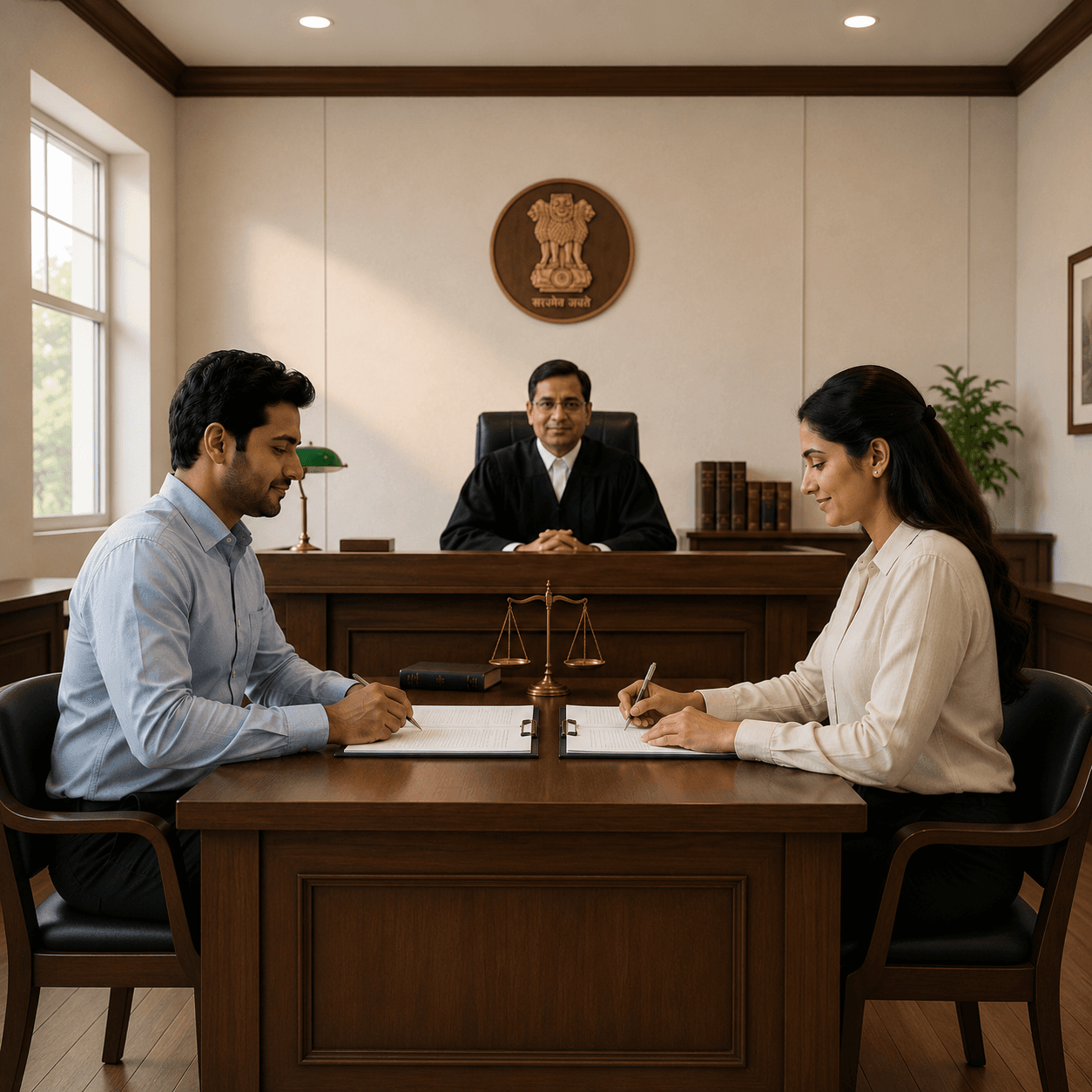
Separation with Clarity and Care
When both partners have mutually decided to move forward separately, the journey requires more than just completing formalities — it requires clarity, understanding and careful guidance.
Know Divorce helps couples organise their decisions, understand the process, address important arrangements and move ahead with confidence through a structured and respectful approach.
Our focus is to simplify a sensitive transition by reducing uncertainty, encouraging cooperation and helping couples complete their mutual consent divorce journey with dignity, transparency and peace of mind.
Mutual Consent Divorce Consultation Form
Please share your basic details and situation. This helps us understand your mutual decision and guide you towards the appropriate next step.
Frequently Asked Questions
Mutual consent divorce is a legal process where both husband and wife voluntarily agree to dissolve the marriage amicably. Both parties jointly petition the court and mutually agree on essential terms including child custody, alimony/maintenance, and division of assets.
Under Section 13B of the Hindu Marriage Act, 1955, couples can file for mutual divorce if they have lived separately for at least one year and cannot live together. The process comprises: 1) First Motion joint petition, 2) A cooling-off period of 6 months (which may be waived under specific court conditions), and 3) Second Motion hearing and recording of statements, leading to the final decree of divorce.
To file a mutual consent divorce: 1) Draft and sign a Settlement Agreement (covering alimony, custody, assets), 2) File the joint petition (First Motion) in the Family Court having jurisdiction, 3) Appear for statement recording and verification, 4) Complete the cooling-off period (or file for waiver), 5) Present the Second Motion petition, and 6) Receive the final divorce decree from the judge.
The essential documents required for mutual divorce in India include: 1) Marriage Certificate / wedding card and photos, 2) Address and identity proofs of both spouses (Aadhaar Card, Passport, etc.), 3) Proof of separate living for at least 1 year, 4) 4 passport-size photographs of each party, 5) Income proofs/tax returns (if applicable), and 6) The Memorandum of Understanding (MoU) detailing mutual settlement terms.
Yes. Know Divorce provides comprehensive mutual consent divorce assistance and lawyer consultation in Kolhapur, Maharashtra. We assist couples with document preparation, MoU structuring, petition drafting, and guidance throughout the Kolhapur Family Court process.
Yes. Mutual consent divorce requires the voluntary agreement and active participation of both parties. If one spouse refuses or withdraws consent before the Second Motion, the mutual consent petition cannot proceed.
Couples should mutually agree on: permanent alimony/one-time settlement, maintenance, return of Stridhan and gifts, child custody and visitation rights, division of joint properties/investments, and closure of any pending legal complaints.
Yes. Mutual consent divorce is the fastest, most dignified, and least stressful way to separate in India. When both partners cooperate, the entire process can often be completed smoothly within 6 months or even sooner if a cooling-off waiver is granted.
If you are confused or not fully decided, consultation and mediation is the recommended first step. Know Divorce helps you examine all options with clarity before making any permanent decision.
Know Divorce simplifies legal complexities by offering compassionate, structured guidance, document checklists, and transparent legal consultation so couples can separate with dignity, clarity, and peace of mind.